Home / Pond Notes / Duck facts
Can You Feed Ducks at Pittsburgh-Area Parks? The Rules, Park by Park
In most parks around Pittsburgh, no. Here’s the actual rule for the county, state and city parks nearby, the fines, and where feeding ducks is still fine.
The short answer: in most parks around Pittsburgh, no. Feeding ducks is banned in every Allegheny County park, in Westmoreland County’s parks, in Pennsylvania state parks and in Lower Burrell’s city parks, with fines of up to $600. We read the official rules in October 2026. Here’s what each one says.
We make duck food, so this isn’t the answer we’d pick. But a bag of Duck Feeder is no help if it earns you a citation, and the rules exist for good reasons (more on that below). Here’s where you can and can’t feed the ducks.
The rules at a glance
| Where | Feeding ducks? | The rule | Fine |
|---|---|---|---|
| Allegheny County parks | Not allowed | County parks regulations, Article II, Section 3 | $100 to $300 |
| Westmoreland County parks | Not allowed (ducks, geese and swans) | County parks ordinance, Section IV(L) | $25 to $600 |
| Pennsylvania state parks | Not without written permission | 17 Pa. Code § 11.211(a)(4) | Not listed in the rule |
| Lower Burrell city parks | Not allowed | City code, Chapter 124 | Up to $600 |
| City of Pittsburgh parks | No feeding ban found | City code § 473.02(a) bars putting anything that may pollute into park ponds and lakes | None listed |
Allegheny County parks: not allowed anywhere
All nine county parks follow one set of rules, and this one is blunt: Feeding of wildlife and exhibit animals is prohibited.
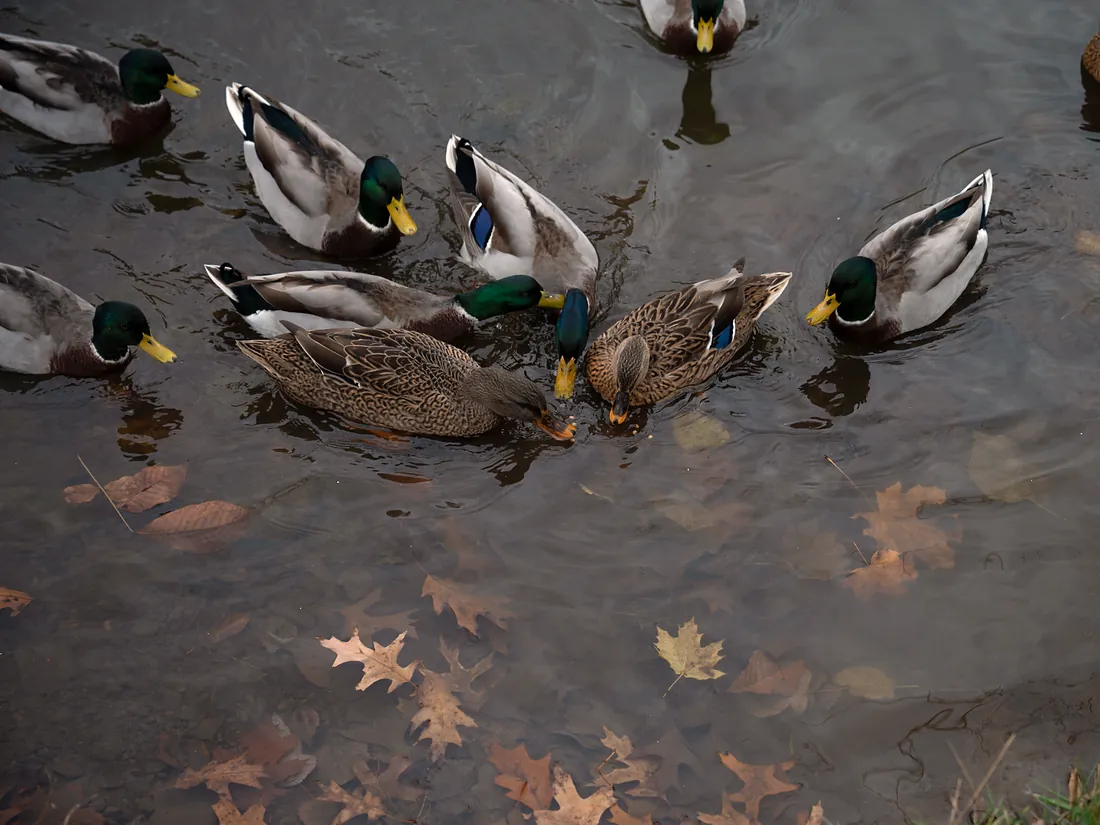
That covers the ducks and geese at North Park Lake, the lakes at Deer Lakes Park, the ponds at Harrison Hills and the farm animals at Round Hill Park. A violation is a summary offense with a fine of $100 to $300, and each violation counts on its own.
Westmoreland County parks: no feeding waterfowl
Since 1999, Westmoreland County’s park ordinance has listed feeding any migratory waterfowl among the things you can’t do in a county park, and it defines waterfowl as swans, geese, river ducks and sea ducks. The county’s 2025 Twin Lakes Park brochure says it plainly: feeding waterfowl in Westmoreland County parks is prohibited. That includes Twin Lakes, Northmoreland and Mammoth parks. Fines run from $25 to $600.
Pennsylvania state parks: not without written permission
State park rules list feeding wildlife among the activities that need written permission from the Department of Conservation and Natural Resources. Without it, don’t feed the ducks at Moraine’s Lake Arthur, Keystone, Yellow Creek, Raccoon Creek or any other state park.
Lower Burrell: not allowed in city parks
Lower Burrell’s code makes it unlawful to feed any animal in any city park, and that includes Burrell Lake Park. The fine can reach $600, and an unpaid fine can mean up to 30 days in jail.
City of Pittsburgh parks: no ban we could find
We didn’t find a ban on feeding ducks in Pittsburgh’s posted park rules or in Chapter 473, the parks chapter of the city code. The code does bar giving any animal or bird tobacco, alcohol or other harmful substances, and it bars throwing anything into a park pond or lake that will or may pollute the water. Bread tossed into Panther Hollow Lake or Lake Elizabeth could fall under that. If you feed ducks in a city park, bring a small handful of food made for them and leave nothing behind. When in doubt, ask Citiparks.
Is it illegal to feed ducks in Pennsylvania?
Not statewide. The Pennsylvania Game Commission’s feeding ban covers only bears and elk. But the Game Commission asks people not to feed wildlife at all, warning that Feeding wildlife is dangerous for wildlife and people.
Parks and towns set their own rules on top of that, which is why the answer changes from park to park.
Why so many parks say no
- Leftovers. Food that isn’t eaten breaks down in the water and draws rats, which go after eggs and ducklings.
- Too much, too often. The Canal & River Trust warns that ducks fed on a regular basis are likely to eat too much.
- Bread pollutes. At the Linesville spillway at Pymatuning State Park, researchers found that visitors throwing bread added about 3.2 kilograms of phosphorus to the water a day, more than the creek’s entire watershed on 33 of the 35 days they measured. Phosphorus feeds algae.
Where you can feed ducks
- At home. Pet ducks, and wild ducks on your own pond, unless your town has a rule against it.
- A private pond, with the owner’s OK. Farms and friends with ponds often welcome it. Ask first.
- Public spots with no ban. Read the posted signs, feed a small handful and take leftovers home.
Wherever you feed, the routine is the same: a small handful at a time, food made for waterfowl instead of bread, and nothing left behind. Not sure what to bring? Here’s the best duck food for parks.
Outside Pittsburgh? See the rules across Pennsylvania, or duck feeding rules by state.
We’ll keep this page current. If you know a park rule near Pittsburgh that we missed, email us at hapetrailsllc@gmail.com.
Sources
- Allegheny County, Parks Policies and Regulations (effective March 27, 2006)
- Westmoreland County, Parks and Recreation ordinance (Ordinance 4-1995, amended by Ordinance 1 of 1999)
- Westmoreland County, Twin Lakes Park brochure, 2025
- Pennsylvania Code, 17 Pa. Code § 11.211, state park prohibited activities
- City of Lower Burrell, City Code, Chapter 124: feeding of animals in city parks
- City of Pittsburgh, Code of Ordinances, Chapter 473: parks
- City of Pittsburgh, Parks Rules
- Pennsylvania Code, 58 Pa. Code § 137.33, feeding bear and elk
- Pennsylvania Game Commission, Six things you can do for wildlife
- Turner and Ruhl, Phosphorus loadings associated with a park tourist attraction, Environmental Management, 2007
- Canal & River Trust, What do ducks eat? Six things you can feed ducks